















Knee replacement (Knee arthroplasty)
Content
Description
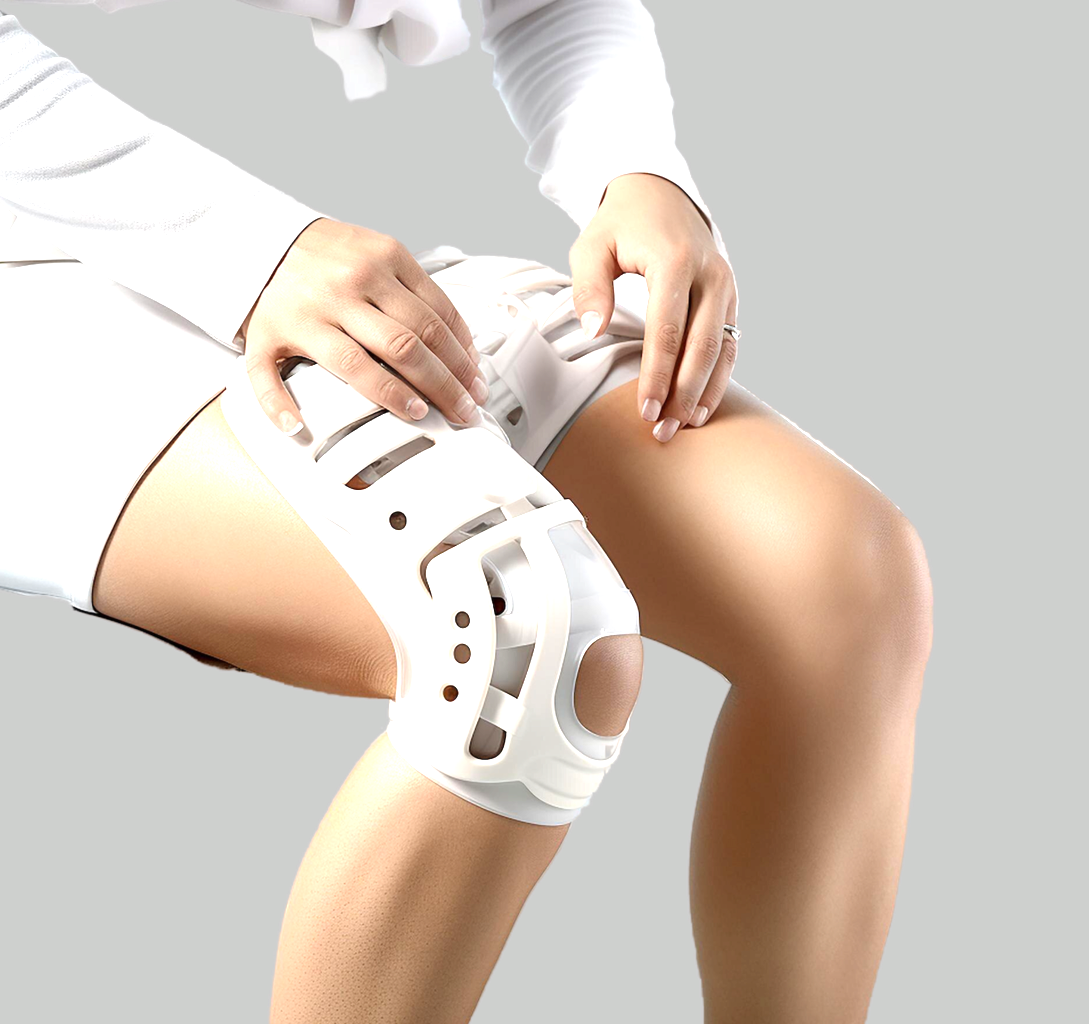
The knee (knee joint) is the biggest joint in the body, very important for walking (carries the weight of the entire body). Knee replacement (knee arthroplasty) is surgery to replace all or some of your knee joint.
The most common cause of damage to the knee joint is mechanical wear of the cartilage (gonarthrosis), which irritates the synovial lining of the joint during movements. Movement is painful, there are permanent changes in the knee and bone growths (osteophytes) are formed. The knee position is deformed into O or X.
The knee joint can also be damaged by inflammation (in rheumatoid arthritis, gout), injury or infection.
Surgeons in the UK perform more than 100,000 knee replacements each year.

Facts
- General or spinal anesthesia
- Stay in hospital for 7 days
- Procedure lasts 2 hours
- Full range of motion after 3 months
Knee joint replacement is performed in cases where other treatment options (physiotherapy, injection treatment, electrotherapy) or other operations (arthroscopy, mosaicplasty - transfer of healthy cartilage) cannot help the patient.
Artificial joint implants today imitate your own joint. The damaged part of the knee is replaced (Partial knee replacement - PKR) or the entire joint (Total knee replacement - TKR) is replaced. During the operation, bone growths (osteophytes) that prevent movement, damaged menisci and ligaments in the knee are adjusted to make the joint stable.
- Partial knee replacement (internal or external hemiarthroplasty) means the replacement of the damaged side of the knee joint.
- Total knee replacement of the entire knee joint with an artificial one (total knee arthroplasty) is an operation in which both damaged joint surfaces are replaced with metal implants, between which a polyethylene insert (made of plastic) is inserted, which reduces friction.
Three types of replacement prostheses are used: cement, non-cement (e.g. titanium) and combined (hybrid).
On the very first day after surgery, rehabilitation begins, while knee movement and standing exercises are initially practiced.
The leg must be relieved after the operation - walking with crutches is practiced, which the patient will need for 6 - 8 weeks.
Patient receives a “Joint Replacement Passport” - a card that identify the holder of the card as a joint replacement patient.
This card can be heplful - it confirms that the implant may activate metal-detectors (e.g. during in-flight checks).